Morning vs. Evening News: When Should You Read?
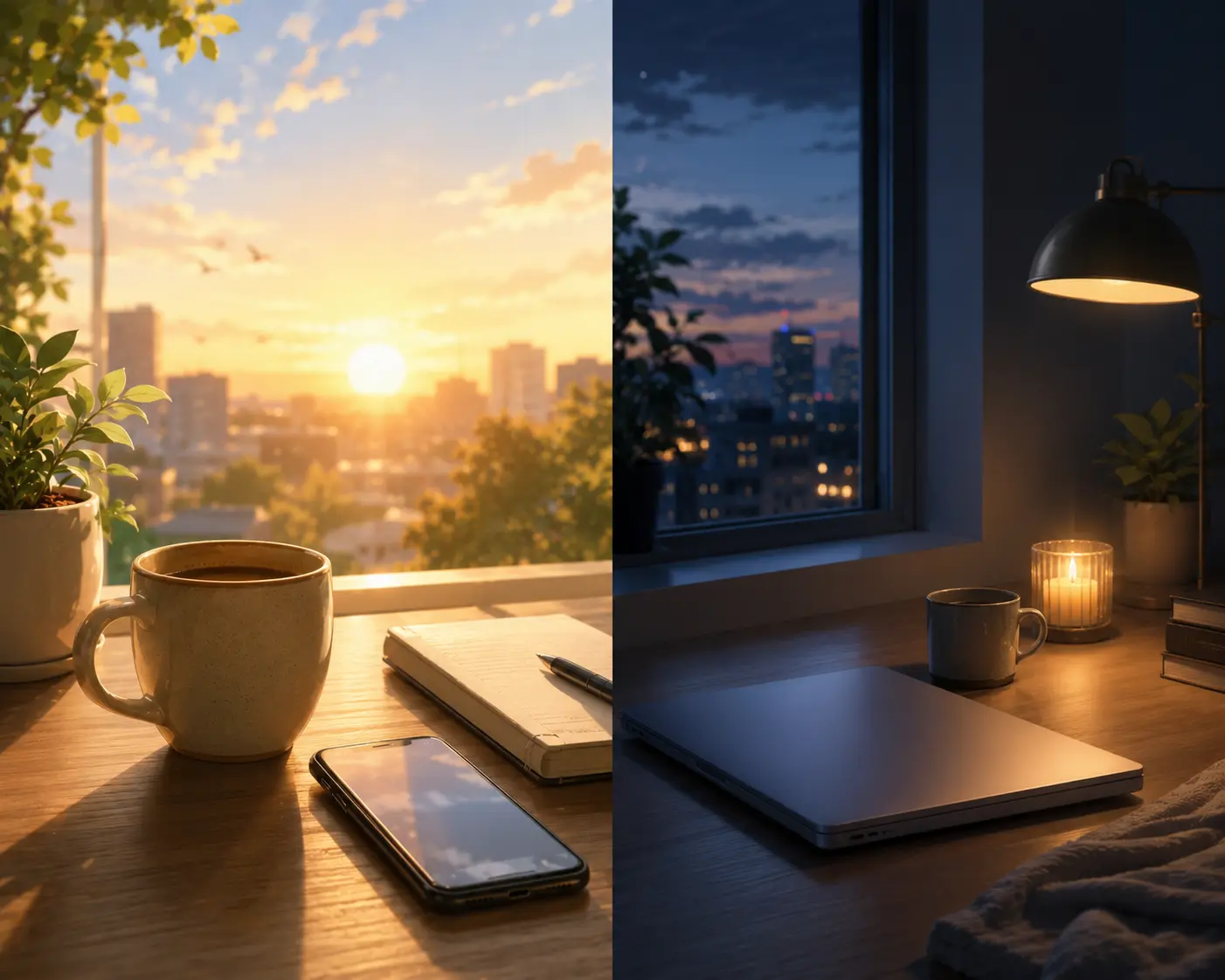
Quick answer: There's no universal best time to read news—morning news works well if you want context before your day starts and can handle occasional bad news without it derailing your focus, while evening news suits people who want a clean, distraction-free workday and don't mind processing the day's events closer to bedtime. The better question isn't morning or evening; it's which one matches your cognitive load at that hour and how close it sits to your sleep.
Most advice on this topic treats "morning person" versus "night owl" as the whole story. It isn't. What actually matters is what your brain is doing right before and right after you read the news, and how much of that news is designed to hold your attention rather than inform you. A stressful headline at 7 AM can color your whole morning; the same headline at 11 PM can keep you awake. This guide breaks down the real trade-offs of morning news versus evening news, so you can choose based on your actual day instead of a generic rule.
Table of Contents
- What Changes Between Morning and Evening Reading?
- Morning News: Pros and Cons
- Evening News: Pros and Cons
- Morning vs. Evening News: Side-by-Side Comparison
- How to Choose Based on Your Day
- Building a Time-Boxed News Routine
What Changes Between Morning and Evening Reading?
The core difference isn't the news itself—it's your cognitive load at the moment you read it. Cognitive load is simply how much mental effort you have available for processing new information; it's higher when you're tired, distracted, or already juggling decisions, and lower when you're rested and focused.
A few practical differences follow from that:
- Morning attention is usually fresher. Most people have more working memory available shortly after waking, which makes it easier to absorb and retain what you read, rather than skimming and forgetting it by lunch.
- Evening attention is often more fatigued. By the end of a workday, mental bandwidth is lower, so dense or upsetting stories tend to feel heavier and are harder to put down mentally once you've read them.
- Proximity to sleep matters. Screen exposure and emotionally charged content close to bedtime can make it harder to wind down, independent of whether the news itself was good or bad.
- Morning news can set your emotional tone for hours. Reading something distressing at 7 AM has more time to influence your mood than the same story read at 9 PM, right before you disengage for the night.
Neither pattern is universally better—they're just different trade-offs depending on when you actually have the mental capacity to handle what you read.
Morning News: Pros and Cons
Reading news first thing has real advantages, but it isn't free of downsides.
Pros:
- You start the day with context for meetings, conversations, or decisions that reference current events.
- Working memory is typically sharper, so you retain more of what you read instead of forgetting it by the afternoon.
- A quick briefing can be finished before other demands on your attention kick in.
Cons:
- A distressing story can set a stressful tone that lingers into your workday.
- Morning routines are often rushed, which encourages skimming headlines instead of reading enough for real context.
- If you check news immediately upon waking, you skip the natural buffer of getting oriented before absorbing outside information.
Evening News: Pros and Cons
Evening reading shifts the trade-offs in the other direction.
Pros:
- Your workday stays free of news-related distraction or anxiety.
- You get a single, complete picture of the day's events rather than fragments checked throughout the day.
- Evening routines are often less rushed, leaving more time to read beyond just headlines.
Cons:
- Screen use and emotionally engaging content close to bedtime can make it harder to relax and fall asleep.
- Fatigue by the end of the day can make complex or negative stories feel more overwhelming than they would earlier.
- You go through your day without any current-events context, which can matter for work or social situations.
Morning vs. Evening News: Side-by-Side Comparison
| Factor | Morning News | Evening News |
|---|---|---|
| Mental sharpness | Generally higher; easier to retain details | Generally lower after a full day |
| Emotional carryover | Can color the rest of your day | Limited, since the day is mostly over |
| Sleep impact | Minimal, unless checked right at wake-up | Can disrupt wind-down if read close to bed |
| Context for the day ahead | Yes—useful before meetings or conversations | No—day has already happened |
| Risk of rushed skimming | Higher, if routines are tight | Lower, if evenings are unstructured |
| Best paired with | A short, time-boxed briefing | A slightly longer, more relaxed read |
Neither column is objectively better. The comparison exists to help you notice which trade-offs actually apply to your life, rather than assuming one schedule works for everyone.
How to Choose Based on Your Day
Instead of picking a time because it's conventional, match it to your actual constraints:
- Notice your mornings. If they're already rushed, adding news risks turning into skimmed headlines with no real context—consider a shorter session or a later time.
- Notice your evenings. If you struggle to fall asleep or wind down, avoid reading emotionally heavy stories in the hour before bed; move that reading earlier or keep it brief.
- Consider your work day. If current events come up in meetings or conversations, a short morning check gives you context you'd otherwise be missing.
- Watch how you feel afterward. If you notice your mood dipping after a certain time slot, that's a signal to adjust—not a reason to force yourself through it out of habit.
- Test both for a week. A short trial is more reliable than guessing; most people find one time clearly suits them better once they compare.
Building a Time-Boxed News Routine
Whichever time you land on, the format matters as much as the timing. A few practices apply regardless:
- Set a fixed length, five to ten minutes is usually enough for the essentials, whether it's morning or evening.
- Choose one structured source instead of switching between several apps or feeds, which extends the session and adds noise.
- Avoid reading in bed right before sleep, even if evening is your preferred slot—read at a desk or in another room, then transition to winding down separately.
- Turn off notifications outside your chosen window so news doesn't arrive at random points that reintroduce the exact trade-off you're trying to manage.
A structured morning or evening briefing—organized from global down to local instead of an open-ended feed—makes it easier to stick to a fixed length regardless of which time you choose. GeoBarta's briefing format is built around that same idea: a defined start and end, rather than a scroll that keeps going. For more on building the habit itself, see our guide on designing a personal news routine that actually sticks.
Frequently Asked Questions
Is it better to read news in the morning or at night?
Neither is universally better. Morning reading tends to work well for people who want context before their day starts and read on sharper attention; evening reading suits people who prefer an uninterrupted workday, as long as it's not read too close to bedtime.
Does reading news before bed affect sleep?
It can, mainly through screen exposure and emotionally engaging content close to bedtime rather than the news topic itself. Reading earlier in the evening, rather than in the final minutes before sleep, reduces that risk.
Why does news feel more stressful in the morning sometimes?
A distressing story read shortly after waking has more hours left in the day to influence your mood than the same story read at night, since there's less time for the effect to fade before you disengage for the day.
How long should a morning or evening news session take?
Five to ten minutes covers the essentials for most people. Longer sessions tend to blur into open-ended scrolling, which works against the goal of a quick, contained check-in.
Can I read news at both times instead of choosing one?
Yes, if it fits your day—some people do a very short morning glance and a longer evening read. The key is keeping each session time-boxed rather than letting either one expand into constant checking throughout the day.
Legal Disclaimer
This article is for general informational purposes only and does not constitute legal, medical, financial, or professional advice. Product names, features, and availability mentioned are current as of the publish date and may change—check GeoBarta's official pages for the latest details. Any statistics without a cited source are illustrative, not verified figures. Opinion-category posts reflect the author's perspective, not a factual claim on GeoBarta's behalf.
There's no single right time to read the news—only the time that fits your mornings, your evenings, and how you actually feel afterward. Pick one, keep it short, and adjust if it isn't working.
Try GeoBarta Free
Get your AI-powered daily news summary in 60 seconds. No signup required.
Start Your Free BriefingContinue Reading
Guides · 4 min read
Morning News Briefing: Build the Perfect News Routine for Your Day
Create an effective morning news briefing routine that keeps you informed without overwhelming your day. Tips for busy professionals, students, and anyone who values their time.
Guides · 5 min read
How to Design a Personal News Routine That Actually Sticks
A practical guide to building a sustainable, low-stress news habit—without the doomscroll.
Guides · 7 min read
How to Build a Calm, Distraction-Free News Experience on Your Phone
A few settings and habits can turn your phone from a distraction source into a calm news tool.