AI News Integration for Apps & Platforms: A Complete Partnership Guide for 2026
This article is for educational and informational purposes only and does not constitute legal, financial, or professional advice.
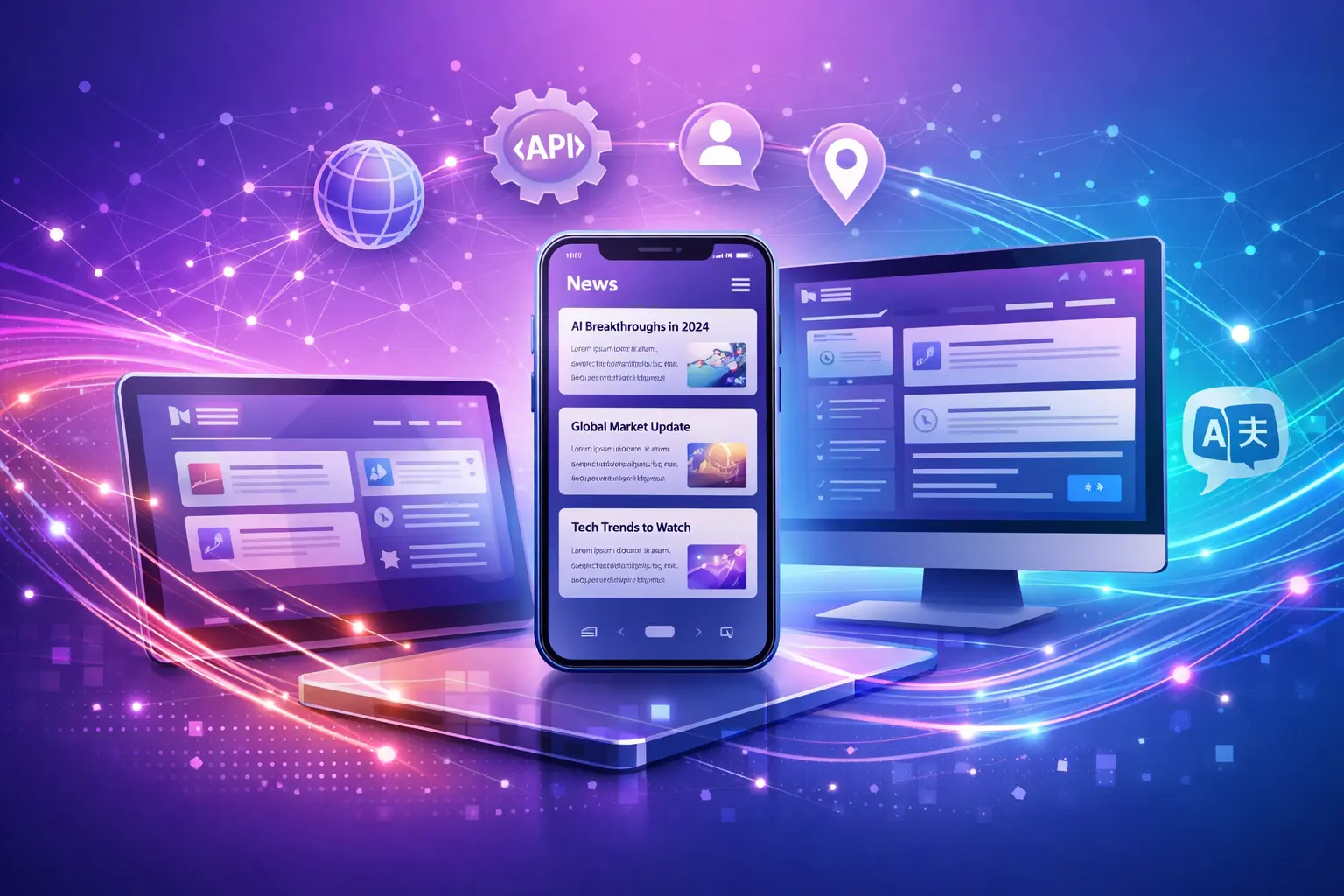
In 2026, news consumption has fundamentally changed. Users expect their favorite apps—whether super apps, banking platforms, or corporate dashboards—to deliver relevant, AI-curated news without leaving the app. This guide explores how businesses can integrate AI-powered news intelligence into their platforms through strategic partnerships.
The Rise of Embedded News Intelligence
Why Apps Are Adding News Features
The integration of news into non-news apps has become a major trend in 2026:
- User Engagement: Industry reports suggest apps with news features may see higher daily active users
- Session Duration: News features can contribute to increased session times
- User Retention: Relevant content integration may improve retention rates
- Revenue Opportunities: New monetization channels through content and advertising
- Competitive Differentiation: Stand out in crowded app marketplaces
The Market Opportunity
Industry Trends for 2026:
- Growing user preference for apps that aggregate multiple services
- Super apps with news features showing accelerated growth patterns
- B2B news API market experiencing significant expansion
- Increasing adoption of news feeds in corporate platforms
- Users frequently checking news throughout the day across different apps
Note: Statistics and trends mentioned are for illustrative purposes based on industry observations and may vary by market, region, and specific implementation.
Understanding News API Partnerships
What Is a News API Partnership?
A news API partnership allows businesses to integrate professionally curated, AI-summarized news content into their applications without building the infrastructure themselves. Think of it as "news-as-a-service."
Key Components:
- API Access: RESTful endpoints for retrieving news data
- AI Summarization: Pre-processed, ready-to-display summaries
- Multi-Source Aggregation: Content from hundreds of verified sources
- Real-Time Updates: Fresh content delivered continuously
- Customization Options: Filter by location, topic, language, and more
Types of Integration Partnerships
1. Integration Partners
What It Is: Basic API access for embedding news into your platform.
Best For:
- Startups and growing companies
- Apps adding news as a secondary feature
- Platforms testing news engagement
Typical Terms:
- API access with usage-based pricing
- Standard support and documentation
- Self-service integration tools
- Basic customization options
2. Distribution Partners
What It Is: Revenue-sharing partnerships where both parties benefit from user engagement.
Best For:
- Established apps with significant user bases
- Platforms where news is a core feature
- Companies seeking long-term strategic partnerships
Typical Terms:
- Revenue sharing on advertising or subscriptions
- Co-marketing opportunities
- Priority support and custom features
- Deeper integration capabilities
3. Enterprise Partners
What It Is: Fully customized, white-label solutions for large organizations.
Best For:
- Fortune 500 companies
- Major super apps and platforms
- Organizations with specific compliance requirements
- Businesses needing complete brand control
Typical Terms:
- Custom pricing and SLAs
- Dedicated account management
- White-label solutions
- Custom feature development
- Priority infrastructure
Common Use Cases for News Integration
1. Super Apps
Challenge: Users want everything in one app—payments, shopping, transportation, AND news.
Solution: Embedded AI news summaries that keep users informed without leaving the app.
Integration Features:
- Personalized news feed based on user location
- Quick daily briefings (60-90 seconds read time)
- Breaking news notifications
- Topic-based news sections
- Multi-language support for global users
Business Impact:
- Increased daily active users
- Longer session times
- Higher user satisfaction scores
- Additional monetization opportunities
2. Corporate Dashboards
Challenge: Employees need to stay informed about industry news and company-relevant topics.
Solution: Curated news feeds integrated into internal platforms and intranets.
Integration Features:
- Industry-specific news filtering
- Competitor monitoring
- Market intelligence summaries
- Customizable topics and sources
- Team sharing and collaboration tools
Business Impact:
- Better-informed workforce
- Improved decision-making
- Competitive intelligence
- Enhanced internal communication
3. Banking & Financial Apps
Challenge: Customers want financial news and market updates alongside their banking features.
Solution: Financial news integration with market intelligence and economic updates.
Integration Features:
- Market news and analysis
- Economic indicators
- Regional financial news
- Investment insights
- Personalized alerts for relevant financial events
Business Impact:
- Increased app engagement
- Better customer education
- Cross-selling opportunities
- Enhanced brand authority
4. Rideshare & Transportation Apps
Challenge: Users have downtime during rides and want to stay informed.
Solution: Location-aware news delivered during trips.
Integration Features:
- Local news based on current location
- Quick-read summaries for short trips
- Destination-relevant news
- Traffic and weather integration
- Multi-language support for travelers
Business Impact:
- Improved rider experience
- Reduced perceived wait times
- Increased brand loyalty
- Additional engagement touchpoints
5. Hospitality & Travel Platforms
Challenge: Travelers want local news and updates about their destinations.
Solution: Geographic news intelligence for travelers.
Integration Features:
- Destination news and updates
- Travel advisories and safety information
- Local events and happenings
- Multi-language news for international travelers
- Cultural context and background
Business Impact:
- Enhanced travel experience
- Better-informed customers
- Competitive differentiation
- Increased booking confidence
6. Business Intelligence Tools
Challenge: Analysts need comprehensive news monitoring across multiple topics and regions.
Solution: Enterprise-grade news aggregation and analysis.
Integration Features:
- Comprehensive topic coverage
- Sentiment analysis
- Trend detection
- Custom alerts and monitoring
- Historical data access
- Export and reporting tools
Business Impact:
- Faster market insights
- Competitive advantage
- Better strategic planning
- Improved risk management
Technical Integration Options
1. RESTful API
What It Is: Standard HTTP-based API for retrieving news data.
Best For: Most applications and platforms.
Key Features:
- Simple GET/POST requests
- JSON response format
- Flexible filtering and pagination
- Rate limiting and authentication
- Comprehensive documentation
Example Use Cases:
- Web applications
- Mobile apps
- Backend services
- Data pipelines
2. Webhooks
What It Is: Real-time push notifications when new content is available.
Best For: Applications requiring immediate updates.
Key Features:
- Instant content delivery
- Reduced polling overhead
- Event-driven architecture
- Customizable triggers
- Retry mechanisms
Example Use Cases:
- Breaking news alerts
- Real-time dashboards
- Notification systems
- Event-driven applications
3. SDKs and Libraries
What It Is: Pre-built libraries for popular programming languages and frameworks.
Best For: Faster development and easier integration.
Available For:
- JavaScript/TypeScript (React, Vue, Angular)
- Python
- Java
- Swift (iOS)
- Kotlin (Android)
- PHP
Benefits:
- Reduced development time
- Built-in best practices
- Type safety and autocomplete
- Regular updates and maintenance
- Community support
4. Embeddable Widgets
What It Is: Drop-in UI components that work out of the box.
Best For: Quick integration with minimal development.
Key Features:
- Customizable styling
- Responsive design
- Dark/light mode support
- Accessibility compliant
- No backend required
Example Use Cases:
- Website integration
- Quick prototypes
- Low-code platforms
- Content management systems
Key Features to Look For in a News API Partner
1. Source Diversity and Quality
Why It Matters: Quality and diversity of sources directly impact content value.
What to Look For:
- Hundreds of verified news sources
- Mix of international and local outlets
- Multiple perspectives on major stories
- Transparent source attribution
- Regular source quality audits
Questions to Ask:
- How many sources do you aggregate from?
- How do you verify source credibility?
- Can I see which sources contributed to each summary?
- How often do you add new sources?
2. AI Summarization Quality
Why It Matters: Poor summaries frustrate users and reduce engagement.
What to Look For:
- High accuracy rates in preserving key information
- Context preservation
- Fact verification processes
- Bias detection capabilities
- Multi-source synthesis
Note: Accuracy rates vary by provider and content type. No AI system is perfect.
Questions to Ask:
- What AI models do you use?
- How do you measure summary accuracy?
- How do you handle breaking news updates?
- Can I see examples of summaries?
3. Multi-Language Support
Why It Matters: Global apps need content in multiple languages.
What to Look For:
- Support for major world languages
- Native language content (not just translation)
- Language-specific sources
- Cultural context awareness
- Consistent quality across languages
Questions to Ask:
- Which languages do you support?
- Is content translated or sourced natively?
- How do you ensure translation quality?
- Can users switch languages seamlessly?
4. Geographic Intelligence
Why It Matters: Users care most about news relevant to their location.
What to Look For:
- Global to local news hierarchy
- City-level granularity
- Location-based filtering
- Regional context
- Multi-location support
Questions to Ask:
- How granular is your geographic data?
- Can I filter by multiple locations?
- How do you determine news relevance to locations?
- Do you support custom geographic regions?
5. Real-Time Updates
Why It Matters: Stale news reduces user trust and engagement.
What to Look For:
- Sub-minute update latency for breaking news
- Continuous content refresh
- Update frequency transparency
- Historical data access
- Versioning for evolving stories
Questions to Ask:
- How quickly do you process new articles?
- What's your update frequency?
- How do you handle breaking news?
- Can I access historical versions of stories?
6. Customization and Filtering
Why It Matters: Different apps have different content needs.
What to Look For:
- Topic-based filtering
- Geographic preferences
- Source selection
- Content length options
- Sentiment filtering
- Custom categories
Questions to Ask:
- What filtering options are available?
- Can I create custom topic categories?
- How flexible is the content customization?
- Can I exclude certain types of content?
7. Performance and Reliability
Why It Matters: Downtime and slow responses hurt user experience.
What to Look For:
- Strong uptime guarantees (SLAs vary by provider)
- Fast response times
- Global CDN distribution
- Automatic failover
- Performance monitoring
Actual performance metrics depend on provider, infrastructure, and service tier.
Questions to Ask:
- What's your uptime guarantee?
- What are typical response times?
- How do you handle traffic spikes?
- What's your disaster recovery plan?
8. White-Label Capabilities
Why It Matters: Brand consistency is crucial for user trust.
What to Look For:
- Customizable branding
- No provider attribution required
- Custom domain support
- Flexible UI components
- Brand guideline compliance
Questions to Ask:
- Can I fully white-label the content?
- Are there any mandatory attributions?
- How customizable are the UI components?
- Can I use my own domain?
9. Analytics and Insights
Why It Matters: Understanding user engagement drives improvement.
What to Look For:
- Engagement metrics
- Popular topics tracking
- User behavior analytics
- A/B testing support
- Custom reporting
Questions to Ask:
- What analytics do you provide?
- Can I track user engagement?
- Do you offer custom reports?
- Can I export analytics data?
10. Security and Privacy
Why It Matters: User data protection is non-negotiable.
What to Look For:
- SOC 2 compliance
- GDPR compliance
- Data encryption
- Privacy-first architecture
- Regular security audits
Questions to Ask:
- What security certifications do you have?
- How do you handle user data?
- Are you GDPR compliant?
- What's your data retention policy?
Integration Process: Step-by-Step
Phase 1: Planning (1-2 weeks)
1. Define Your Requirements
- What type of news content do you need?
- Who is your target audience?
- What languages do you need to support?
- What geographic regions matter most?
- What's your expected traffic volume?
2. Evaluate Potential Partners
- Research available news API providers
- Compare features and pricing
- Review documentation quality
- Check customer reviews and case studies
- Request demos and trials
3. Technical Assessment
- Review API documentation
- Test API endpoints
- Evaluate response times
- Check data quality
- Assess integration complexity
4. Business Alignment
- Review pricing models
- Understand SLAs and guarantees
- Clarify support options
- Negotiate terms if needed
- Plan for scaling
Phase 2: Development (2-4 weeks)
1. Set Up Development Environment
- Obtain API credentials
- Configure development environment
- Set up testing framework
- Establish monitoring
2. Build Core Integration
- Implement API calls
- Handle authentication
- Process responses
- Implement error handling
- Add caching layer
3. Develop UI Components
- Design news feed layout
- Create article cards
- Build detail views
- Implement navigation
- Ensure responsive design
4. Add Customization
- Implement filtering
- Add personalization
- Configure preferences
- Set up notifications
- Customize branding
Phase 3: Testing (1-2 weeks)
1. Functional Testing
- Test all API endpoints
- Verify data accuracy
- Check error handling
- Test edge cases
- Validate filtering logic
2. Performance Testing
- Load testing
- Response time verification
- Caching effectiveness
- Mobile performance
- Network resilience
3. User Testing
- Gather user feedback
- Test usability
- Verify content relevance
- Check accessibility
- Refine UI/UX
4. Security Testing
- Verify authentication
- Test data encryption
- Check for vulnerabilities
- Validate privacy controls
- Review compliance
Phase 4: Launch (1 week)
1. Soft Launch
- Release to limited users
- Monitor performance
- Gather feedback
- Fix critical issues
- Optimize as needed
2. Full Launch
- Roll out to all users
- Announce new feature
- Monitor metrics closely
- Provide user support
- Collect feedback
3. Post-Launch
- Analyze engagement data
- Identify improvement areas
- Plan iterations
- Scale infrastructure
- Optimize costs
Legal and Compliance Considerations
Content Licensing
Important: When integrating news content, ensure you have proper licensing rights.
Key Points:
- API providers should have licensing agreements with news sources
- Verify that your use case is covered by the provider's licenses
- Understand attribution requirements
- Respect copyright and intellectual property
- Review terms of service carefully
Questions to Ask Your Provider:
- Do you have proper licensing for all content?
- What are the attribution requirements?
- Are there any usage restrictions?
- Can I use content for commercial purposes?
- What happens if a source requests removal?
Data Privacy
Important: User data privacy must be protected at all times.
Key Considerations:
- GDPR compliance for European users
- CCPA compliance for California users
- Data minimization principles
- User consent for personalization
- Right to deletion
- Data portability
Best Practices:
- Only collect necessary data
- Obtain explicit user consent
- Provide clear privacy policies
- Allow users to control their data
- Implement data retention policies
- Regular privacy audits
Terms of Service
Important: Clearly communicate terms to your users.
What to Include:
- How news content is sourced
- Third-party content disclaimers
- Limitation of liability
- User responsibilities
- Content accuracy disclaimers
- Update frequency expectations
Accessibility Compliance
Important: Ensure your news integration is accessible to all users.
Requirements:
- WCAG 2.1 Level AA compliance
- Screen reader compatibility
- Keyboard navigation
- Color contrast requirements
- Alternative text for images
- Captions for video content
Pricing Models and Cost Considerations
Common Pricing Structures
1. Usage-Based Pricing
How It Works: Pay per API call or per article retrieved.
Best For:
- Startups and small apps
- Variable traffic patterns
- Testing and prototyping
Example Cost Range:
- Pricing varies widely by provider
- Volume discounts typically available
- Many providers offer free development tiers
Actual costs depend on provider, usage volume, and specific requirements.
2. Subscription Pricing
How It Works: Fixed monthly or annual fee for unlimited access.
Best For:
- Predictable traffic
- Medium to large apps
- Budget planning
Example Cost Range:
- Standard plans vary significantly by provider and features
- Enterprise pricing is typically customized
Actual costs depend on provider, feature set, usage volume, and contract terms.
3. Revenue Share
How It Works: Share revenue generated from news-related features.
Best For:
- Established apps with monetization
- Strategic partnerships
- Long-term relationships
Example Terms:
- Revenue share percentages vary by provider and agreement
- Minimum guarantees may apply in some cases
- Co-marketing opportunities may be available
Actual terms are negotiated individually and vary significantly.
4. Custom Enterprise
How It Works: Negotiated pricing based on specific needs.
Best For:
- Large organizations
- Complex requirements
- White-label solutions
Example Cost Range:
- Enterprise pricing is highly customized
- Custom SLAs and features typically included
- Dedicated support usually provided
Actual costs vary significantly based on requirements, scale, and negotiated terms.
Hidden Costs to Consider
Infrastructure:
- Caching layer costs
- CDN expenses
- Database storage
- Bandwidth usage
Development:
- Initial integration time
- Ongoing maintenance
- Feature updates
- Bug fixes
Operations:
- Monitoring and alerting
- Customer support
- Content moderation
- Quality assurance
Measuring Success: Key Metrics
Engagement Metrics
Daily Active Users (DAU):
- Track users accessing news features daily
- Compare to overall app DAU
- Monitor trends over time
Session Duration:
- Measure time spent on news content
- Compare to other app features
- Identify engaging content types
Content Interactions:
- Article opens
- Shares and saves
- Comments and reactions
- Click-through rates
Business Metrics
User Retention:
- 7-day retention rate
- 30-day retention rate
- Cohort analysis
- Churn reduction
Monetization:
- Ad revenue from news section
- Subscription conversions
- In-app purchases
- Lifetime value impact
User Acquisition:
- News feature as acquisition driver
- Referral rates
- App store ranking impact
- Organic growth
Technical Metrics
Performance:
- API response times
- Error rates
- Uptime percentage
- Cache hit rates
Costs:
- API usage costs
- Infrastructure costs
- Cost per active user
- ROI calculation
Best Practices for Successful Integration
1. Start Simple, Iterate Fast
- Launch with core features first
- Gather user feedback early
- Add complexity gradually
- Measure everything
- Iterate based on data
2. Prioritize User Experience
- Fast loading times
- Clean, intuitive interface
- Relevant content
- Easy navigation
- Seamless integration with existing features
3. Respect User Preferences
- Allow customization
- Provide opt-out options
- Respect notification preferences
- Enable content filtering
- Give users control
4. Maintain Content Quality
- Monitor content relevance
- Review AI summaries regularly
- Handle user feedback
- Update filters as needed
- Remove low-quality sources
5. Plan for Scale
- Design for growth
- Implement caching strategically
- Monitor performance continuously
- Optimize costs proactively
- Plan infrastructure scaling
6. Build Strong Partner Relationships
- Communicate regularly
- Provide feedback
- Collaborate on improvements
- Share success metrics
- Plan long-term together
Common Pitfalls to Avoid
1. Poor Content Relevance
Problem: Showing irrelevant news frustrates users.
Solution:
- Implement smart filtering
- Use location data appropriately
- Allow user customization
- Monitor engagement metrics
- Adjust algorithms based on feedback
2. Slow Performance
Problem: Slow news loading hurts overall app experience.
Solution:
- Implement aggressive caching
- Use CDN for content delivery
- Optimize API calls
- Lazy load content
- Monitor performance continuously
3. Overwhelming Users
Problem: Too much news creates information overload.
Solution:
- Curate carefully
- Limit initial content volume
- Provide clear organization
- Allow users to control density
- Use progressive disclosure
4. Ignoring Mobile Experience
Problem: News features work poorly on mobile devices.
Solution:
- Mobile-first design
- Optimize for touch
- Minimize data usage
- Fast loading on slow connections
- Responsive layouts
5. Neglecting Analytics
Problem: Can't improve what you don't measure.
Solution:
- Implement comprehensive tracking
- Review metrics regularly
- A/B test changes
- Listen to user feedback
- Make data-driven decisions
The Future of News Integration
Emerging Trends for 2026 and Beyond
Voice-First News:
- Audio summaries for hands-free consumption
- Voice-activated news queries
- Podcast-style daily briefings
Hyper-Personalization:
- AI-driven content recommendations
- Behavioral learning
- Context-aware delivery
- Predictive content surfacing
Interactive News:
- Ask follow-up questions
- Explore related topics
- Visual data exploration
- Collaborative reading
Augmented Reality:
- AR news overlays
- Location-based news visualization
- Immersive storytelling
Blockchain Verification:
- Source verification
- Content authenticity
- Transparent provenance
- Decentralized fact-checking
Conclusion
Integrating AI-powered news intelligence into your app or platform in 2026 is no longer a luxury—it's a competitive necessity. Users expect comprehensive, relevant news wherever they spend their digital time, and partnerships with news API providers make this integration faster, cheaper, and more reliable than building from scratch.
The key to success lies in choosing the right partner, implementing thoughtfully, and continuously optimizing based on user feedback and engagement data. Whether you're building a super app, corporate dashboard, or specialized platform, embedded news intelligence can drive engagement, retention, and revenue.
As AI technology continues to advance, the quality and capabilities of news APIs will only improve, making now the perfect time to explore partnership opportunities and bring the power of AI-curated news to your users.
Ready to integrate AI-powered news into your platform? GeoBarta offers flexible partnership options for businesses of all sizes—from startups to Fortune 500 companies. Our API delivers AI-summarized news from hundreds of sources in multiple languages, with geographic intelligence from global to local levels.
Interested in learning more? Contact our partnerships team at partners@geobarta.com to discuss your integration needs and explore how we can help you deliver exceptional news experiences to your users.
For developers: Visit our API documentation to explore endpoints, test the API, and see code examples. Start building in minutes with our comprehensive guides and SDKs.
Disclaimer: This article provides general information about news API partnerships and integration strategies for educational purposes only. It does not constitute legal, financial, technical, or professional advice. Specific features, pricing, terms, and capabilities vary significantly by provider and are subject to change. Statistics and examples mentioned are illustrative and may not reflect actual results. Always conduct thorough due diligence, review contracts carefully, and consult with qualified legal counsel, technical advisors, and other professionals regarding licensing, privacy, compliance, security, and other requirements for your specific use case. GeoBarta and the author(s) make no warranties or representations regarding the accuracy, completeness, or suitability of this information and disclaim all liability for any actions taken based on this content.
Try GeoBarta Free
Get your AI-powered daily news summary in 60 seconds. No signup required.
Start Your Free BriefingContinue Reading
Technology · 10 min read
How GeoBarta Builds Your Perfect 60-Second Daily Briefing (Behind the Scenes)
Ever wonder how GeoBarta delivers comprehensive news from 1,100+ sources in just 60 seconds? Go behind the scenes to discover our 4-layer system, AI-powered summarization, and how we process 25,000-35,000 articles daily to bring you the news that matters.
Technology · 14 min read
AI News Summary 2026: Get Your Daily AI-Generated News Briefing
Discover how AI news summaries deliver comprehensive news in 60 seconds. Compare the best AI news summary tools, learn how they work, and get free AI-generated news briefings in multiple languages.
Technology · 12 min read
How Location-Aware AI is Going to Change News Consumption in 2026–2027
Discover how location-aware AI is transforming news from generic global feeds to hyper-personalized, multilingual briefings that understand your context. Explore 2026-2027 predictions for AI-powered news consumption with real-world examples.