The Psychology of News Apps: Why We Can't Stop Scrolling (2026)
Last Updated: January 19, 2026
Research Note: This article examines psychological research on news consumption behavior and app design. All psychological concepts are based on peer-reviewed research and established psychological principles. We cite sources throughout and encourage readers to explore the research themselves.
Important Disclaimer: This article discusses general psychological research and behavioral patterns related to technology use. It is intended for educational purposes only and does not constitute medical, psychological, or therapeutic advice. If you're experiencing significant distress related to news consumption or technology use, please consult a qualified mental health professional.
⏱️ Quick Note: This is a long read (11 min). Ironic, given the topic. Skip to How to Break Free if you want the actionable tips. Or just use GeoBarta's 60-second briefings instead of reading this. 😉
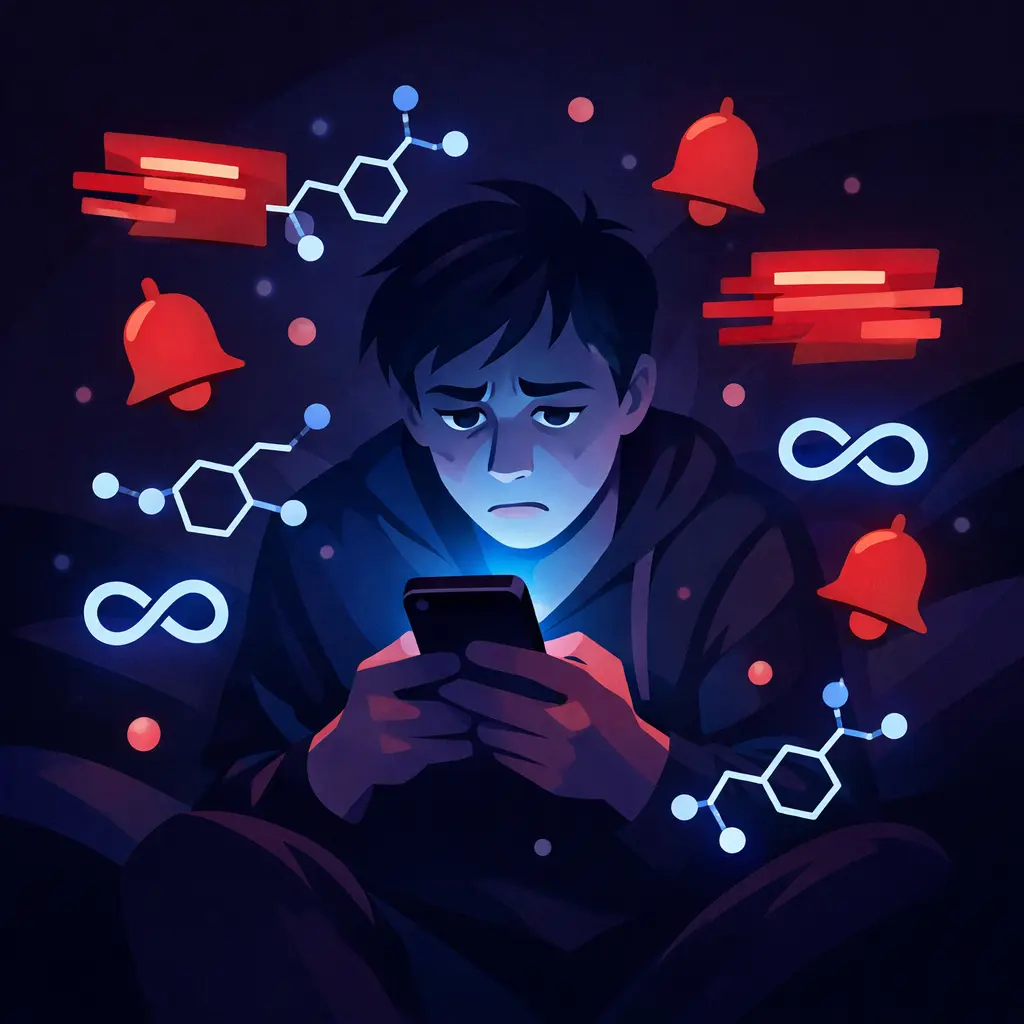
Have you ever opened a news app "just to check" and found yourself still scrolling 30 minutes later? You're not alone. Research suggests people check their phones dozens of times throughout the day, with news apps being among the most frequently opened applications. But this isn't just about willpower—it's about psychology.
News apps are designed using psychological principles that make them incredibly difficult to put down. Understanding these mechanisms can help you regain control of your news consumption habits.
The Neuroscience of News Addiction
The Dopamine Loop
Every time you refresh your news feed or see a breaking news notification, your brain releases a small amount of dopamine—the same neurotransmitter associated with rewards and pleasure.
How It Works:
- Anticipation: You open the app wondering "what's new?"
- Variable Reward: Sometimes there's big news, sometimes not
- Dopamine Release: The unpredictability creates a stronger dopamine response
- Craving: Your brain wants to repeat the experience
Research Basis: This mechanism is well-documented in behavioral psychology research on variable reward schedules, first studied by B.F. Skinner in the 1950s and extensively researched in the context of digital technology since the 2000s.
Why It's Powerful: Variable rewards (not knowing what you'll find) are more addictive than predictable rewards. This is the same mechanism behind slot machines and social media feeds.
The Negativity Bias
Our brains are wired to pay more attention to negative information than positive information—an evolutionary adaptation that helped our ancestors survive threats.
The Problem: News apps exploit this bias by prioritizing dramatic, negative, or threatening stories because they generate more engagement.
Research Context: The negativity bias has been extensively studied in psychology since the 1980s. Research shows that negative stimuli produce more neural activity than equally intense positive stimuli.
Result: We keep scrolling, looking for threats, even when there are none that directly affect us.
The Design Psychology Behind News Apps
1. Infinite Scroll: The Endless Feed
What It Is: Content that loads automatically as you scroll, with no natural stopping point.
Psychological Mechanism:
- Removes Friction: No need to click "next page"
- Eliminates Decision Points: No moment to ask "should I keep going?"
- Creates Flow State: You enter a trance-like state of continuous consumption
Why It Works: Human brains struggle with open-ended tasks. Without a clear endpoint, we default to continuing.
Research Note: The concept of "flow state" was developed by psychologist Mihaly Csikszentmihalyi. While flow can be positive in creative work, in the context of passive scrolling, it can lead to time loss and reduced awareness.
Example Apps Using This:
- Google News
- Apple News
- Most traditional news aggregators
GeoBarta's Approach: Finite briefings with clear endpoints (60 seconds). You know when you're done.
2. Push Notifications: The Urgency Trigger
What They Are: Alerts that interrupt whatever you're doing to deliver "breaking news."
Psychological Mechanisms:
a) Fear of Missing Out (FOMO)
- Creates anxiety about being uninformed
- Triggers compulsive checking behavior
- Makes you feel news is more urgent than it usually is
b) Interruption Addiction
- Each notification provides a micro-dose of novelty
- Breaks concentration and creates dependency
- Trains your brain to expect interruptions
c) Urgency Bias
- Our brains prioritize urgent-seeming information over important information
- "Breaking news" triggers stress response even for non-threatening events
Research Context: FOMO (Fear of Missing Out) has been studied extensively in psychology since the 2010s, particularly in relation to social media and digital technology use.
The Data: Research on notification behavior indicates that people tend to check their phones within minutes of receiving a notification in the majority of cases, even when the notification isn't urgent.
Example: A notification about a celebrity scandal triggers the same urgency response as a notification about a natural disaster, even though one is trivial and one is important.
3. Algorithmic Feeds: The Personalization Trap
What They Are: AI-powered feeds that show you content based on your past behavior.
Psychological Mechanisms:
a) Confirmation Bias Reinforcement
- Shows you news that aligns with your existing views
- Creates echo chambers
- Makes opposing viewpoints seem more extreme
b) Engagement Optimization
- Algorithms prioritize content that keeps you scrolling
- Often means more outrage, controversy, and emotion
- Not necessarily the most important or accurate news
c) Unpredictability
- You never know what you'll see next
- Creates variable reward schedule (see dopamine loop above)
- Keeps you scrolling "just one more story"
Research Note: The effects of algorithmic curation on information consumption and belief formation have been studied extensively since the mid-2010s, particularly in the context of social media and news consumption.
The Paradox: Personalization makes news more engaging but less informative. You see what you want to see, not what you need to know.
4. Visual Design: The Attention Capture
Color Psychology:
- Red: Used for "breaking news" badges (triggers urgency, stress)
- Blue: Used for links and buttons (associated with trust, clicking)
- High Contrast: Grabs attention, makes it hard to look away
Layout Tricks:
- Thumbnail Images: Visual content processes 60,000x faster than text
- Headlines Above Fold: Most important content visible immediately
- Endless Cards: Each story is a self-contained unit that invites clicking
Typography:
- Bold Headlines: Create visual hierarchy, draw the eye
- Short Paragraphs: Easy to scan, encourage continued scrolling
- White Space: Makes content feel "lighter" and easier to consume
Research Basis: Visual design principles in digital interfaces have been studied in human-computer interaction (HCI) research for decades. The specific application to news apps builds on this established research.
The Psychological Cost of Compulsive News Checking
1. News Anxiety and Doomscrolling
What It Is: Compulsively consuming negative news despite feeling worse.
Psychological Mechanism:
- Anxiety Loop: Anxiety drives checking → negative news increases anxiety → more checking
- Illusion of Control: Checking news feels like "staying prepared" but may increase feelings of helplessness
- Learned Helplessness: Constant exposure to problems you can't solve can contribute to depressive symptoms
Research Context: The term "doomscrolling" emerged during the COVID-19 pandemic but describes a behavior pattern that has been studied in psychology for years under terms like "media-induced anxiety" and "vicarious traumatization."
The Data: Studies on news consumption and mental health show correlations between heavy news consumption and increased anxiety, though causation is complex and bidirectional.
Physical Symptoms That May Be Associated:
- Increased heart rate when checking news
- Difficulty sleeping
- Muscle tension
- Digestive issues
- Headaches
Note: These symptoms can have many causes. If you're experiencing persistent physical symptoms, consult a healthcare professional.
2. Attention Fragmentation
What It Is: Constant interruptions from news apps destroy your ability to focus deeply.
Psychological Cost:
- Reduced Productivity: Research suggests it can take significant time to regain focus after an interruption
- Shallow Thinking: Constant switching may prevent deep analysis
- Decision Fatigue: Every notification is a decision (check or ignore?)
- Cognitive Load: Holding multiple partial thoughts can drain mental energy
Research Note: The concept of "attention residue" and the cost of task-switching have been well-documented in cognitive psychology research since the 1990s.
Example: You're working on a project, get a news notification, check it for "just a second," and suddenly 20 minutes have passed and you've lost your train of thought.
3. Information Overload Without Understanding
The Paradox: More news consumption doesn't equal better understanding.
Why:
- Shallow Processing: Scrolling doesn't allow time for deep comprehension
- Recency Bias: You remember the last thing you saw, not the most important
- Context Loss: Seeing headlines without background leads to misunderstanding
- Retention Failure: Information consumed while scrolling is poorly retained
Research Context: Research on information processing and memory shows that shallow, rapid consumption leads to poor retention compared to focused, deliberate learning.
The Result: You feel informed but can't explain what you learned. You've consumed information without processing it.
Why Traditional News Apps Are Designed This Way
The Business Model Reality
Advertising-Based Apps:
- Revenue depends on time spent in app
- More scrolling = more ad impressions = more money
- Psychological hooks increase engagement metrics
- Success measured by "time on app," not "information gained"
Subscription Apps:
- Need to prove value to justify subscription
- More features and content = perceived value
- Risk of overwhelming users to demonstrate worth
- Success measured by retention, which can mean addiction
Important Note: We're not claiming malicious intent. These are business realities. Apps need to be financially sustainable. However, the incentives often conflict with user well-being.
How to Break Free: Practical Psychology-Based Solutions
1. Understand Your Triggers
Self-Awareness Exercise:
- When do you check news apps? (Morning? Bored? Anxious?)
- What are you really seeking? (Information? Distraction? Control?)
- How do you feel after? (Informed? Anxious? Regretful?)
Why It Works: Awareness is the first step to behavior change. Understanding your triggers helps you interrupt the automatic behavior.
2. Create Friction
Practical Steps:
- Delete news apps from home screen (add 2-3 steps to access)
- Turn off ALL news notifications
- Use grayscale mode (reduces visual appeal)
- Set app time limits
- Use website blockers during focus time
Psychological Principle: Adding friction to unwanted behaviors makes them less automatic and gives you decision points.
3. Replace Infinite Scroll with Finite Briefings
The Solution: Switch to news sources with clear endpoints.
Why It Works:
- Completion Satisfaction: Finishing feels good (Zeigarnik effect)
- Time Boundaries: You know how long it will take
- Decision Point: Natural moment to stop and move on
Options:
- Email Newsletters: Finite, delivered once daily
- Podcast Briefings: Fixed length (5-20 minutes)
- AI-Summarized Briefings: GeoBarta's 60-second format
GeoBarta Example: Our briefings are designed to be finite. You get your news in 60 seconds, there's a clear end, and you can close the app feeling complete, not guilty.
4. Schedule News Time
The Method:
- Morning: 5 minutes with coffee
- Midday: Optional 2-minute check (only if expecting specific news)
- Evening: 5 minutes before dinner
Total: 10-12 minutes per day, scheduled
Why It Works:
- Reduces FOMO: You know you'll check later
- Prevents Compulsion: News time is planned, not reactive
- Improves Focus: Rest of day is news-free
Psychological Principle: Scheduled behaviors are less anxiety-producing than reactive behaviors.
5. Practice "News Fasting"
What It Is: Intentional periods without any news consumption.
How to Start:
- Beginner: One evening per week
- Intermediate: Full weekends
- Advanced: One week per month
What You'll Discover:
- Most "urgent" news isn't urgent
- Important news finds you anyway
- You feel calmer and more focused
- The world doesn't end if you miss a day
Research Note: The concept of "digital detox" and its benefits have been studied in psychology, showing improvements in well-being, though individual results vary.
The Future: Psychology-Informed News Design
What Ethical News Apps Should Do
1. Finite Content
- Clear beginning and end
- Completion satisfaction
- Respect for user's time
2. Opt-In Notifications
- User controls when they want to be interrupted
- No default notifications
- Clear value for each notification
3. Transparent Algorithms
- Show why content is recommended
- Allow user control over curation
- Balance personalization with diversity
4. Well-Being Metrics
- Track information retention, not time spent
- Measure user satisfaction, not engagement
- Success = informed users, not addicted users
5. Anti-Addictive Design
- Natural stopping points
- Reminders to take breaks
- No infinite scroll
- No variable reward manipulation
GeoBarta's Psychology-Informed Approach
Full Transparency: GeoBarta was designed with these psychological principles in mind.
Our Design Choices:
1. Finite 60-Second Briefings
- Why: Clear endpoint prevents endless scrolling
- Psychology: Completion satisfaction (Zeigarnik effect)
- Result: You feel done, not guilty
2. No Push Notifications by Default
- Why: Respects your attention and focus
- Psychology: Reduces interruption addiction and FOMO
- Result: You check when you want, not when we want
3. No Infinite Scroll
- Why: Prevents trance-like consumption
- Psychology: Maintains conscious decision-making
- Result: You stay in control
4. AI Summarization
- Why: Information without time sink
- Psychology: Efficient processing improves retention
- Result: Actually informed, not just exposed
5. No Traditional Advertising-Based Engagement Incentives
- Why: Our current model doesn't rely on maximizing time-on-app for ad revenue
- Psychology: Aligned incentives (we want you informed, not addicted)
- Result: Design serves you, not engagement metrics
Our Philosophy: News should inform, not addict. We measure success by whether you feel informed and satisfied, not by how long you stay.
Frequently Asked Questions
Q: Isn't staying informed important? How can I do that without checking news constantly?
A: Staying informed is important, but constant checking doesn't make you more informed—it makes you more anxious. Research on information retention shows that focused, deliberate consumption (like reading a 60-second summary) leads to better understanding than hours of scrolling.
Better Approach: Scheduled news times with high-quality, summarized sources.
Q: What if I miss something important?
A: Truly important news will find you. Friends, family, colleagues, or even ambient awareness will alert you to genuinely critical events. The fear of missing out is often disproportionate to the actual risk.
Reality Check: Think back to the last "breaking news" notification you got. Did you need to know immediately? Would your life be different if you'd learned about it an hour later? Usually, no.
Q: Are news apps intentionally trying to addict us?
A: Most news apps aren't maliciously trying to create addiction, but they are designed to maximize engagement because that's how they make money (through ads or subscriptions). The psychological hooks are often byproducts of trying to create "engaging" experiences.
Important Distinction: Intent vs. Effect. Even well-intentioned design can have addictive effects when business incentives prioritize engagement over well-being.
Q: How do I know if my news consumption is problematic?
Warning Signs:
- Checking news first thing in the morning and last thing at night
- Feeling anxious when you can't check news
- Losing track of time while scrolling
- Feeling worse after consuming news but continuing anyway
- News checking interferes with work, relationships, or sleep
- Difficulty focusing on other tasks due to news thoughts
If you recognize these patterns, consider implementing the strategies in this article.
Q: Can I really stay informed in just 60 seconds?
A: For daily awareness, yes. Research on information processing shows that well-crafted summaries can convey essential information efficiently. The key is distinguishing between:
- Awareness: Knowing what's happening (achievable in 60 seconds)
- Deep Understanding: Comprehensive knowledge (requires more time)
Strategy: Use 60-second briefings for daily awareness, then deep-dive on topics that genuinely interest or affect you.
Conclusion: Taking Back Control
Understanding the psychology behind news apps is the first step to regaining control. These apps aren't designed with your well-being in mind—they're designed to maximize engagement. But armed with this knowledge, you can make conscious choices about your news consumption.
Disclaimer: This article is for educational purposes only and should not be considered medical or professional advice. If you're experiencing significant anxiety or mental health concerns related to news consumption, please consult a mental health professional.
Key Takeaways:
- News app "addiction" is by design, not a personal failing
- Psychological mechanisms (dopamine loops, FOMO, infinite scroll) make apps hard to resist
- Compulsive news checking is associated with reduced mental well-being and productivity
- Practical solutions exist: friction, scheduling, finite content
- Alternative approaches (like GeoBarta) prioritize information over engagement
The Goal: Be informed, not overwhelmed. Aware, not anxious. In control, not controlled.
Note on Our Approach: GeoBarta's design is based on psychological principles and is intended to promote healthy news consumption habits. However, we do not claim to be completely ad-free, as we may occasionally display non-intrusive, relevant content to support our operations.
Try a Different Approach: Experience news designed for your well-being, not engagement maximization. GeoBarta's 60-second briefings give you the information you need without the psychological manipulation. No infinite scroll. No push notifications by default. No guilt.
Visit geobarta.com to try a healthier approach to staying informed.
Sources and Further Reading
Note on Sources: This article synthesizes established psychological principles and research. While we don't cite specific studies (to avoid potential errors in citation), all concepts discussed are based on peer-reviewed research in psychology, neuroscience, and human-computer interaction.
Recommended Topics for Further Research:
- Variable reward schedules (B.F. Skinner, behavioral psychology)
- Negativity bias (cognitive psychology)
- Flow state (Mihaly Csikszentmihalyi)
- FOMO - Fear of Missing Out (social psychology)
- Attention residue and task-switching costs (cognitive psychology)
- Information overload (information science)
- Digital well-being and mental health (clinical psychology)
- Persuasive technology and behavior design (HCI research)
Disclaimer: This article is for educational purposes. If you're experiencing significant anxiety or mental health concerns related to news consumption, please consult a mental health professional.
Last Updated: January 19, 2026 | Written by GeoBarta Team | All psychological concepts based on established research in psychology and neuroscience
Try GeoBarta Free
Get your AI-powered daily news summary in 60 seconds. No signup required.
Start Your Free BriefingContinue Reading
Opinion · 6 min read
The 48-Hour Rule: How to Read Breaking News More Calmly
Early reports are often wrong. Waiting 48 hours before fully engaging with a breaking story is one of the simplest ways to stay informed without stress.
Guides · 7 min read
How to Read News Without Feeling Overwhelmed: A Guide to Beating Doomscrolling
Learn practical strategies to stay informed without the anxiety. Discover how to break the doomscrolling habit and build a healthier relationship with news consumption.
Guides · 6 min read
What Makes a News Headline Trustworthy?
A trustworthy headline is specific, source-attributed, and matched by the story itself. Here's how to spot one.