How to Design a Personal News Routine That Actually Sticks
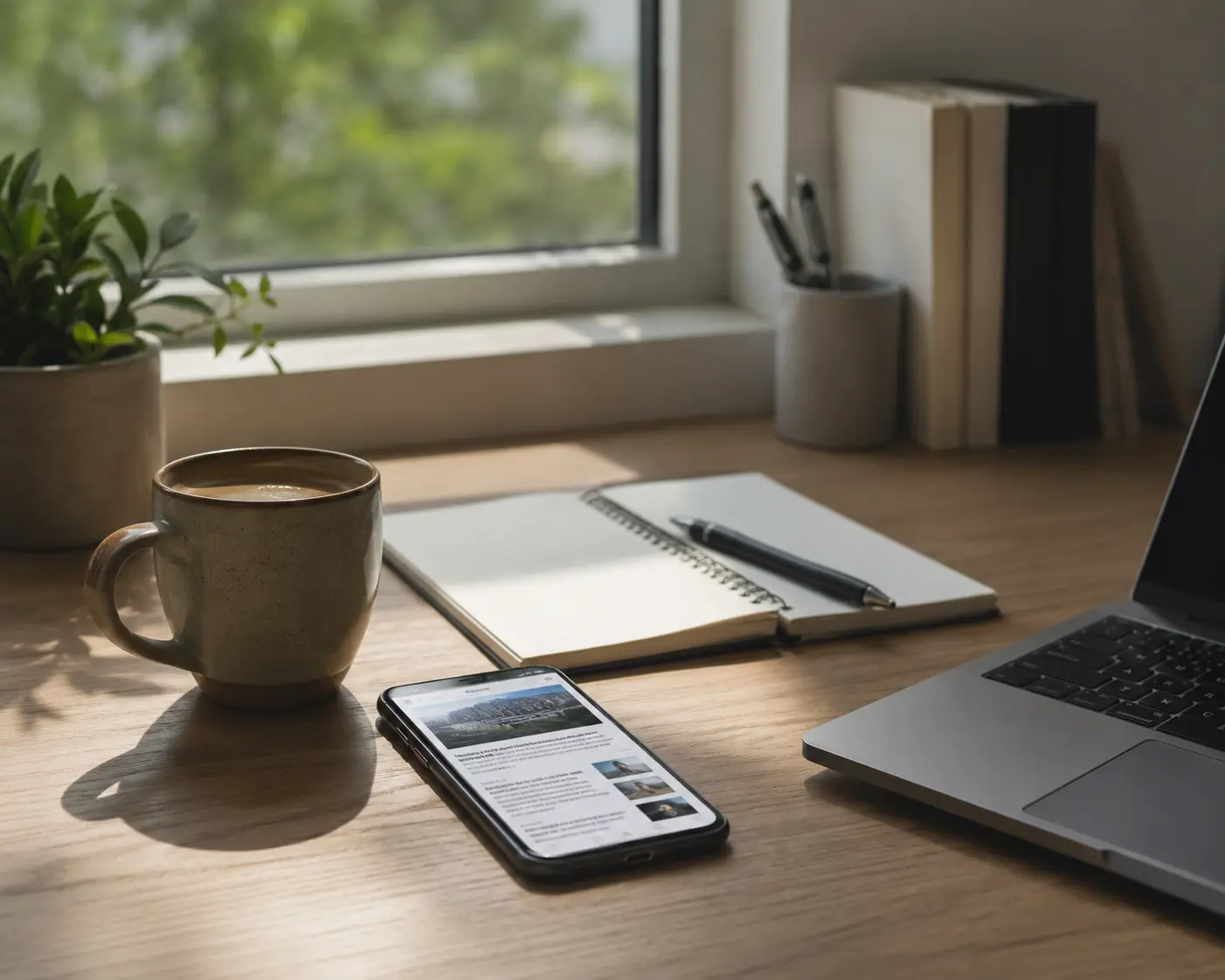
Quick answer: To build a news routine that lasts, pick one fixed time of day, read from one trusted source instead of several, cap the session at 5-10 minutes, and turn off notifications outside that window. The routine survives because it removes decisions—you don't have to choose whether to check news, you already know when and how.
Most people don't fail at staying informed because they lack sources. They fail because they never set boundaries around when and how much. Without a routine, news becomes something that interrupts the day instead of something scheduled into it. This guide covers what actually makes a news routine durable, plus a step-by-step way to build one this week.
What Makes a News Routine Actually Stick?
A routine that lasts usually shares three traits, whether it's for exercise, reading, or news:
- A fixed trigger. It's attached to something you already do daily—coffee, commute, lunch break—so it doesn't need extra willpower.
- A small, consistent size. Five to ten minutes is easier to protect than thirty. Small sessions also make it easier to notice when you've had enough.
- A single point of entry. One briefing or one source beats juggling five apps. Fewer decisions means fewer chances to skip the habit or spiral into extra scrolling.
The goal isn't reading less news out of principle—it's making intentional news consumption the default instead of something you have to consciously choose every time.
How to Build Your Routine in 5 Steps
- Pick one fixed time. Morning coffee and early evening wind-down both work well; avoid the first minutes after waking and the last before sleep, since those are the times you're least able to set boundaries around what you read.
- Choose one primary source. A short, structured morning briefing that moves from global to local stories in a few minutes is easier to stick with than switching between several news apps and social feeds.
- Set a time limit before you start. Five to ten minutes is enough for the essentials. If a story interests you, save it and read the full piece later rather than extending the session.
- Turn off notifications outside your window. Push alerts are designed to pull you back in at random times. Keeping them limited to your chosen slot protects the rest of your day.
- Review weekly, not daily. Once a week, ask whether the routine is working—too much, too little, wrong time—and adjust. Daily second-guessing just recreates the friction you're trying to remove.
How to Handle Breaking News Without Breaking Your Routine
Genuine breaking news is rare; most "breaking" alerts aren't things that need your attention the moment they happen. When something significant does occur outside your scheduled window:
- Give it a few hours before reading deeply—early reports are often incomplete or revised.
- Check it during your next scheduled session instead of immediately, unless it directly affects your safety or plans.
- Resist the urge to keep refreshing for updates; a single check later usually tells you more than five checks now.
Keeping breaking news inside your routine, rather than letting it override it, is what keeps the habit from quietly falling apart.
Weekly Routine Checklist
Use this once a week to check whether your routine is holding up:
- [ ] Did I read news at roughly the same time each day?
- [ ] Did I stay within my time limit most days?
- [ ] Did notifications stay off outside my scheduled window?
- [ ] Did I avoid extra checking during breaking news?
- [ ] Do I feel informed without feeling drained?
If most boxes are unchecked, the routine's design—not your discipline—is usually the problem. Adjust the time, source, or length before giving up on it.
A morning briefing works well as the anchor for this kind of routine because it's short by design and covers global, national, and local stories in one pass rather than requiring several separate checks. GeoBarta's briefing format—organized from global down to local, with saved articles for anything you want to revisit later—is built around that same idea: read once, know enough, move on. It's designed to help you stay informed without adding another thing to manage during the day.
Frequently Asked Questions
How long should a daily news routine take?
Five to ten minutes is enough for most people to cover the essentials. Longer sessions tend to blur into open-ended scrolling, which is harder to sustain.
What's the best time of day for a news routine?
Mid-morning, after the first hour of your day, or early evening both work well. Avoid checking news in the first minutes after waking or right before bed, since those windows make it harder to stop at your intended limit.
Should I follow multiple news apps to stay well-informed?
Not necessarily. One well-structured source that covers global, national, and local stories can cover the essentials; add a second source only for topics you specifically follow, rather than for general coverage.
What if I miss a day of my routine?
Skip it and resume the next scheduled time. Trying to "catch up" on missed news usually turns into an extended session that undermines the habit you're building.
Is it bad to check news outside my routine occasionally?
Occasional exceptions are fine. The routine is meant to be the default, not a rigid rule—consistency over weeks matters more than perfection on any single day.
Legal Disclaimer
This article is for general informational purposes only and does not constitute legal, medical, financial, or professional advice. The habit-building suggestions here are general practices, not a guaranteed method—results vary by individual and circumstance. Product names, features, and availability mentioned are current as of the publish date and may change—check GeoBarta's official pages for the latest details. Any statistics without a cited source are illustrative, not verified figures.
A news routine doesn't need to be elaborate to work. Pick a time, pick a source, keep it short, and review it weekly. The habit that sticks is usually the smallest one you can actually repeat.
Try GeoBarta Free
Get your AI-powered daily news summary in 60 seconds. No signup required.
Start Your Free BriefingContinue Reading
Guides · 8 min read
Morning vs. Evening News: When Should You Read?
Morning and evening news reading affect your focus and sleep differently. Here's how to pick the time that actually fits your day.
Guides · 14 min read
How to Build a Balanced News Diet in 2026: Complete Information Nutrition Guide
Learn how to create a healthy, balanced news diet that keeps you informed without overwhelming you. Discover the 4 food groups of news, the 5-15-30 rule, and practical strategies to avoid information overload while staying current on global, national, and local events.
Guides · 7 min read
How to Read News Without Feeling Overwhelmed: A Guide to Beating Doomscrolling
Learn practical strategies to stay informed without the anxiety. Discover how to break the doomscrolling habit and build a healthier relationship with news consumption.